
Answering science鈥檚 toughest questions through interdisciplinary collaboration


Interdisciplinarity
Sponsored by
Advice for bringing together multiple academic disciplines into one project or approach, examples of interdisciplinary collaboration done well and how to put interdisciplinarity into practice in research, teaching, leadership and impact

You may also like
Popular resources
Interdisciplinarity
Sponsored by
Advice for bringing together multiple academic disciplines into one project or approach, examples of interdisciplinary collaboration done well and how to put interdisciplinarity into practice in research, teaching, leadership and impact
Medical science has made great advances in the battle against cancer thanks to the research power of a broad coalition of scientists. To sustain this progress, multidisciplinary perspectives will remain vital, leading the search for better diagnostics, more effective treatments and a greater understanding of the disease.
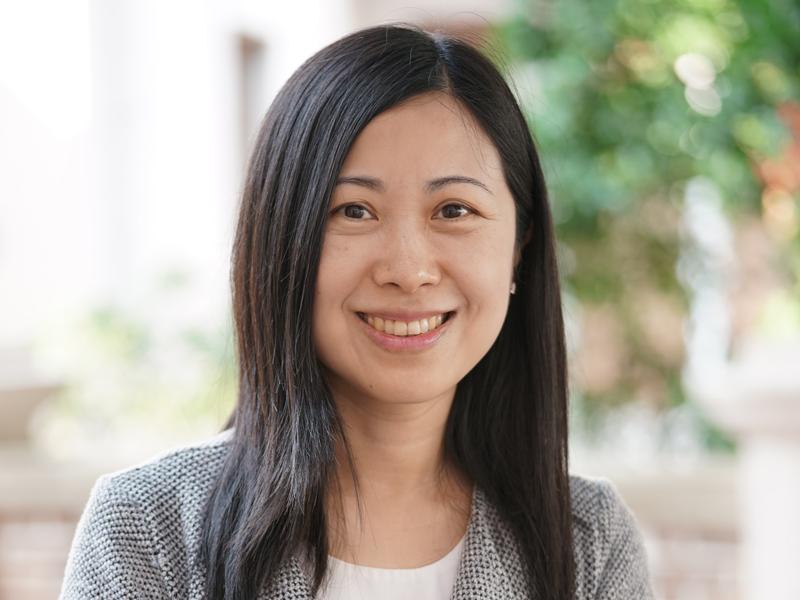
Alice Wong can testify to that. A chair professor in the School of Biological Sciences and associate vice-president of research at the University of Hong Kong, Wong鈥檚 research into signal transduction in cancer cells explores how the disease spreads. Her group鈥檚 findings on cell adhesion dynamics potentially open up avenues for novel treatments. She says cancer is just one example among many of how today鈥檚 biggest research questions require multidisciplinary collaboration.
鈥淔or my project, I鈥檝e brought in chemists, where we talk about drug discovery,鈥� she says. 鈥淓ven with some of the patient samples, we might have to bring in a biostatistician. We might also have to bring in computational biologists when we handle some of the single-cell data. With these questions, you need people with different expertise to come together to answer them.鈥�
Many of the University of Hong Kong鈥檚 interdisciplinary collaborations arise from like-minded scientists getting together in a room. It can be as easy as that. Collaboration often happens organically, bottom-up. 鈥�A lot of the symposiums nowadays 鈥� say it is a cancer and drug discovery symposium 鈥� we are already inviting experts from different areas. By talking to other members from different areas it is easier to get collaborations,鈥� says Wong.
But there are also institutional incentives for those willing to collaborate. The university favours applications from scientists who want to set up research centres with an interdisciplinary focus. Its research committee sets aside HKD 48 million (拢4.7m) of annual funding for interdisciplinary projects. Funding streams that prioritise interdisciplinary research still play a vital role in getting projects off the ground.
The University of Hong Kong鈥檚 research ecosystem is supported by funding from the University Grants Committee, whose Collaborative Research Fund was established to encourage the proliferation of multidisciplinary research groups tackling the kinds of cross-disciplinary 鈥� and cross-institutional 鈥� collaborations that are needed when dealing with subjects such as infectious diseases, climate change, fintech and advanced materials.
Interdisciplinary research needs support at all levels. The talent pipeline is crucial. Wong credits her PhD programme at the University of British Columbia for giving her a grounding in interdisciplinary collaboration. The thesis committee model also taught her the value of interdisciplinary perspectives.
鈥淭hey bring in expertise from different departments to come together to look at your work, to ask you questions,鈥� says Wong. 鈥淪o we are already in an environment where we feel collaboration is important and that we do things together.鈥�
Wong says the biggest challenge thereafter is whether researchers can attract others to work with them and whether they can lead a project. It all begins with a conversation and a compelling research question in search of an answer.
Times Higher Education has partnered with Schmidt Science Fellows to develop a new ranking measuring universities鈥� contribution to interdisciplinary science.
about Schmidt Science Fellows.
