
Digital assessment and examination needs to adapt to ensure its future success



Inspera
Find out how Inspera makes assessment more inclusive, fair and relevant
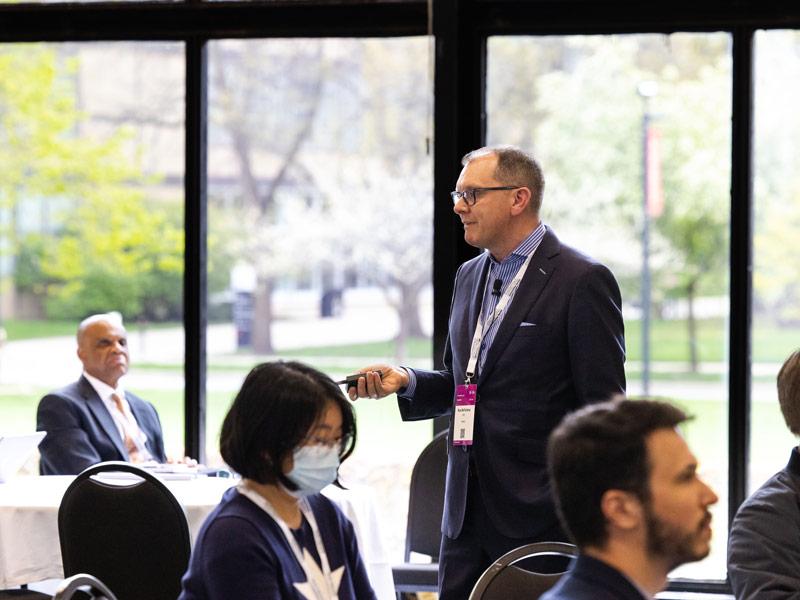
Every era has its social markers and expectations. For Generation X, the ideal leader was a commander and learning styles were formal. For today鈥檚 students, learning styles are interactive and multimodal, explained Roe McFarlane, CEO of Inspera, a digital assessment and remote proctoring provider, at a session during 色盒直播鈥檚 Digital Universities US event. 鈥淏efore the pandemic, we had become used to digital content and online learning was on the rise. But when Covid hit, we found ourselves in a forced experiment with everyone rushing to record lectures and access digital course materials,鈥� he said.
Getting digital examination right amid this was chaos. Decisions on how to proceed were often made with little research and subsequently there were gaps in technology leading to increased academic misconduct. Short-term, emergency measures around online teaching, testing and marking became embedded and integrity was lost in the process, McFarlane said: 鈥淢any turned to their learning management systems for digital testing capability, but they鈥檙e not built for it. They were never meant to have laser-focused exam and testing capability at scale.鈥�
McFarlane argued that dedicated digital assessment tools can improve fairness and reduce bias in several ways. Students are not judged for the quality of their handwriting, for example, and faculty do not see the name of the student so unconscious bias is mitigated. Digital examinations also allow students to receive their results more quickly.
According to EdTech Magazine, 87 per cent of faculty agree that digital assessment improves learning and student outcomes, while 70 per cent of students prefer taking online assessment to using pen and paper. Digital assessment can be brought to life through interactive question types, complex rubrics that enable partial marking, and the ability to change the variables across questions or tests to reduce the risk of misconduct. 鈥淚n an end-to-end exam cycle there are hundreds of options including coursework, tests, open and closed book exams, in-person and online,鈥� McFarlane said. 鈥淭eachers are tired of sewing together different solutions. They want one tool that can address this whole continuum.鈥�
Digital assessment solutions and add-on proctoring products need to be mindful of the nuances between students from different cultures. 鈥淔or example, if someone looks up, are they cheating? Some cultures are more pensive and they might just be figuring it out,鈥� he said. Increasingly, artificial intelligence will be able to analyse and review these patterns and provide the data for faculty to make judgement calls, as well as make use of sophisticated facial recognition to establish and check student consistency and even provide the tools to perform extensive plagiarism checks.
鈥淟earning can now take place anywhere, but testing and exams are still a challenge,鈥� McFarlane concluded. 鈥淎ssessment is becoming more complicated, but we鈥檙e still faced with ethical issues and the need for higher integrity.鈥� However, with solutions that are built to address the complex needs of today鈥檚 exam requirements the future of digital assessment is bright.
about Inspera.
