
Driving change: creating student-NGO partnerships for climate solutions


Created in partnership with

Created in partnership with
You may also like
Students often feel disheartened by climate change, perceiving their contributions as insignificant compared with nations and corporations. Indeed, a 2021 revealed that more than 50 per cent of 10,000 students experienced negative emotions when discussing climate change, with 82.6 per cent feeling that people had failed the planet.
In order to empower students in this crucial area, however, it is worth considering a by GlobeScan and the SustainAbility Institute, which rated NGOs and the United Nations above national governments in advancing the Sustainable Development Goals (SDGs).
- Spotlight collection: a greener future for higher education
- Circular impact: a call to action for research on grand societal challenges
- 色盒直播 podcast: universities aren鈥檛 too small to lead the climate crisis fight
We have found that involving students in collaborations with climate-focused organisations can empower them to contribute to solutions. To guide you in initiating these collaborations and ensuring their effectiveness, we present eight steps for creating a project with students and NGOs focusing on SDG 13 (鈥淭ake urgent action to combat climate change and its impacts鈥�).
1. Talk to your class
Discuss your students鈥� interests and find out how they wish to engage in climate-related topics such as mitigation and justice. Show that you care about their concerns and explore these subjects in your class to help them determine their approach for collaboration.
2. Frame your class participation in climate action
Explore the United Nations Development Programme (UNDP)鈥檚 publication on . Read it in detail, focusing on part one for foundational insights for your class project. In part 1.2, you should gain clarity on your students鈥� potential levels of participation, whether that comes in policy, politics, community initiatives, climate justice or specific local problems. You can also consider asking different groups to focus on different functions or outcomes, such as research, community building, communications, even entrepreneurship. Remember that each of these is valuable, even if the entire class assumes the same role. If you鈥檙e uncertain, limit participation to a single function to simplify the project.
3. NGOs as partners
When considering an NGO for collaboration, it鈥檚 important to choose one that aligns with your students鈥� characteristics and interests. Some youth-oriented options include the and , but research or ask your students for recommendations that match their attitudes and interests. Regardless of your choice, prioritise creating a comfortable and empowering environment for your students, allowing them to express their agency, as recommended by the UNDP.
4. Think local, act local
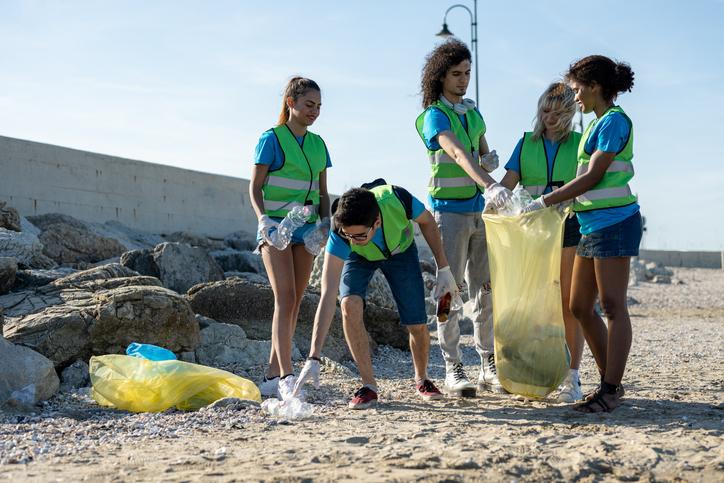
Encourage hope by showcasing the results of students鈥� actions. Explore local climate crisis impacts and their causes, then collaborate with a community-focused NGO to address these issues through various activities and approaches.
5. Narratives
To drive real change, consider the UNDP鈥檚 narrative assessment approach. This involves challenging the status quo behind the climate crisis and proposing alternatives. Show your class what鈥檚 been done, why it hasn鈥檛 worked, key stakeholders and other relevant factors to reveal systemic issues. This also encourages critical thinking about prevention, mitigation and adaptation strategies and their impact on the crisis.
6. Working on the project: start small
First, start small. A good way to do this is by making sure your students know (or any other) they鈥檙e working on. If different agencies or organisations are to be used, make sure everyone knows if they鈥檙e affecting different targets and the roles they will play in doing so.
7. Working on the project: pedagogy
Check Unesco鈥檚 , especially its advice on interactive, project-based, learner-centred pedagogy in the learning environment. Also, if you have questions about which topics and/or approaches to explore, consider reading the guide.
8. Working on the project: what will they turn in?
This is linked to the role/function your class, or different groups, were asked to assume. If they were focusing on communication, their task might be the creation of a multimedia project covering the crisis context, key players, impact, reasons for the lack of change and necessary reforms. Alternatively, if they were focused on entrepreneurship, this could involve designing a sustainable product or service backed by scientific principles and ensuring equitable access. Regardless of their function, assessment should focus on their systemic analysis, adherence to scientific principles and consideration of climate justice.
Remember that the project needs to be as focused as possible yet also requires complex preparation so it ends with real climate action and students feeling empowered. If you need an example, consider ours: in an online class, 360 of our students collaborated with the United Nations Information Centre (UNIC) to address sustainability issues, particularly ocean pollution in Mexico. Their #PorNuestrosOc茅anos campaign involved creating videos (meaning they participated as communicators), with the top three shared on UNIC鈥檚 platforms and at Mexico City train stations. With guidance from 10 teachers, students completed these videos in a month, resulting in 100 per cent of them reporting feeling excited about contributing to ocean pollution solutions and 94 per cent expressing renewed hope for environmental impact. If you鈥檙e interested, .
Luis Ricardo Fern谩ndez Carril is a professor and sustainability coordinator in the School of Humanities and Education, and Luis Gerardo Rojas Solorio is an associate professor of ethics, sustainability and social responsibility, both at Tecnol贸gico de Monterrey, Mexico.
If you would like advice and insight from academics and university staff delivered direct to your inbox each week, .
