
Inside the data-driven search for migraine relief


Interdisciplinarity
Sponsored by
Advice for bringing together multiple academic disciplines into one project or approach, examples of interdisciplinary collaboration done well and how to put interdisciplinarity into practice in research, teaching, leadership and impact

You may also like
Interdisciplinarity
Sponsored by
Advice for bringing together multiple academic disciplines into one project or approach, examples of interdisciplinary collaboration done well and how to put interdisciplinarity into practice in research, teaching, leadership and impact
Image credit: Claudine Gossett
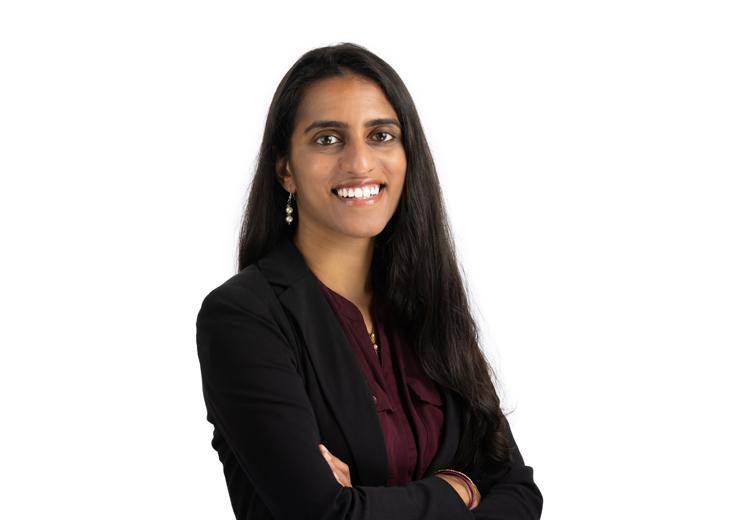
Discussions of impactful research often focus on the bigger picture: impact at a societal level, how an innovation might revolutionise an industry or improve the lives of a particular community. And yet for researchers like Sandya Subramanian, a postdoctoral fellow at Stanford University, impact is something they can put a name and a face to.
Subramanian鈥檚 research focuses on developing a physiological monitoring system that gathers data from the autonomic nervous system in chronic migraine patients. The work is inherently interdisciplinary, requiring computational and hardware expertise, and it finds her deployed in clinical settings, where patients will often consider her a part of their clinical team.
鈥�People will share aspects of their life with you and be very open and vulnerable with you in ways that sometimes is very intimidating to handle,鈥� she says. 鈥淏ut one of the benefits of being interdisciplinary all this time is that I have been trained, I have a familiarity with clinical environments that really helps that.鈥�
Being embedded as a 鈥減seudo member鈥� of the clinical team, collecting this data herself and interacting with patients, Subramanian enjoys a unique perspective on her research and considers her patients co-collaborators whose feedback on the monitoring technology is invaluable.
鈥�It gives you this very human perspective,鈥� she says. 鈥淵ou get this very real kind of sampling like when people come back and tell you, 鈥榃ell, this was a little hard to wear. This was a little uncomfortable鈥�. It gives you a very real sampling of the real-world problems of implementing this. As a scientist, it also gives you a whole new perspective on the data.鈥�
The American Migraine Foundation estimates that up to 148 million people worldwide have chronic migraines, with three to five per cent of the US population affected. Subramanian hopes the data pooled from the autonomic nervous system 鈥� which she describes as a bridge between brain and body 鈥� can be used to inform better treatment pathways.
鈥�The autonomic nervous system is probably the less-loved child because everyone focuses on what happens in the brain directly and the spinal cord next, and then everyone is interested in things like movement and decision-making and emotion,鈥� she says. 鈥淭hey are all so much more sexier sounding than basic reflexes, right? The autonomic nervous system gets a lot less attention and therefore has been far less studied.鈥�
It might be less-studied but it鈥檚 no less important. The data collected by this technology could offer insights into any number of conditions. More broadly, the application of wearable physiological sensors could change the existing healthcare paradigm, with data insights gleaned from wearable tech facilitating more personalised medicine. If successful, Subramanian鈥檚 patients will have played their part.
鈥淢ost patients are happy to participate because they see it as their way of giving back to the healthcare system,鈥� she says. 鈥淭hey are asking lots of questions and are really happy to take on some inconvenience and participate and for that I have always been very grateful.鈥�
Times Higher Education has partnered with Schmidt Science Fellows to develop a new ranking measuring universities鈥� contribution to interdisciplinary science.
about Schmidt Science Fellows.
