
Leveraging open research infrastructure for digital transformation




Digital Science
Learn how Digital Science addresses complex challenges to research through technological innovation and data-driven solutions
As universities work to fulfil the ambitions of their digital transformation strategies, the proficiency of research management software and infrastructure is being evaluated. The need for dependable systems that work for users and administrators is paired with the sustained momentum of open research practices, with a growing number of policies from funders and publishers calling for all research to be open.
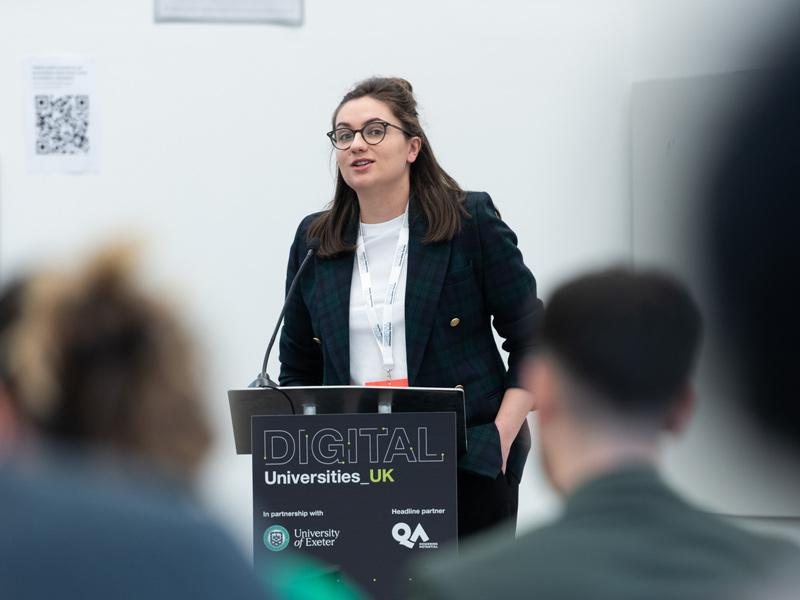
To meet the goals of digital transformation and support open research, universities need to mature their research management infrastructure. During a session at the 2024 色盒直播 Digital Universities UK event, Adrian Clark and Claire Turner from Digital Science discussed the additional value that can be extrapolated from proficient open research infrastructure.
鈥淥pen research is a global movement and global phenomenon,鈥� said Clark, who is business development manager at Figshare. Key research stakeholders 鈥� including funders, journals, publishers, institutions, researchers and professional services staff 鈥� are starting to work together to ensure that openness becomes standard practice in the field and that the infrastructure exists to support this.
Among the key benefits of adopting open research practices are improvements in research integrity, equity and ownership. 鈥淲e are all aware of the reproducibility crisis and how that is impacting trust in research,鈥� said Clark. 鈥淚n terms of equity, open research allows everyone to benefit from research no matter where it is produced.鈥� However, versatile, reliable and interoperable repositories will be crucial in the progression of open research. Figshare, which is part of Digital Science, provides repository infrastructure to institutions, enabling them to share, showcase and manage all of their research outputs.
Digital transformation strategies demand integrated technology environments as services and software need to exchange information with a wide range of sources. 鈥淲e are moving to a place where the research infrastructure landscape is a constellation of interconnected services and structures,鈥� said Clark. 鈥淭he next-gen repositories are as much about what they connect to as they are about the content they contain,鈥� he added.
鈥淚t shouldn鈥檛 be difficult to access and utilise [institutional repositories]. We want clear, easy workflows to access these,鈥� said Clark. 鈥淢aking sure that organisations and researchers are uniquely and persistently identified underpins all the dataflow from a repository to wherever it鈥檚 going. This allows us to be able to rely on the information that we can extract from the metadata.鈥�
FAIR, which stands for findable, accessible, interoperable and reusable, is a set of principles for sharing data to promote transparency, collaboration and innovation. FAIR principles help to share research in a way that is meaningful to people who want to use it for meta-analysis, said Claire Turner, senior vice-president of commercial for research workflow solutions at Digital Science.
Turner summarised the core values for managing research outputs. 鈥淩esearch output should be shared as open as possible but as closed as necessary,鈥� said Turner. 鈥淭here are disciplines where sensitive data need to be stored securely and safely. So we need to have infrastructure that allows us to be fully open but not always.鈥� She noted that as we move into an AI-driven world, research outputs should be both human and machine-readable, to foster greater interoperability. 鈥淲hen you train large language models, we need to make sure that what goes in is meaningful, which FAIR helps with.鈥�
Turner said that institutional repositories such as Figshare help to make research available and discoverable to everyone, regardless of where it was originally published, echoing Clark鈥檚 argument that repositories can democratise research and improve collaboration globally. 鈥淓very university has a different repository,鈥� said Turner. 鈥淏uilding tools within the repository to make it easy for researchers to collaborate and publish their content is important.鈥�
Both Clark and Turner emphasised the role of a dependable repository in helping universities support open and transparent research management while contributing to an integrated and connected digital research environment
The speakers:
- Adrian Clark, business development manager, Figshare
- Claire Turner, senior vice-president of commercial for research workflow solutions, Digital Science
about how Digital Science can support your needs across the entire research lifecycle.
