
Psychological safety can be a positive, powerful influence on learning environments


You may also like
From climate change and political instability, through to global pandemics, bold action is required to address society鈥檚 most pressing issues. Many of our existing approaches to complex problems are not working. We need to find new ways of thinking and taking action, and colleagues with fresh outlooks, optimism and original ideas. Tomorrow鈥檚 graduates will be crucial to the fight. Higher education institutions have a responsibility to prepare students for these roles and provide them with opportunities that nurture creativity and resourcefulness.
But providing such opportunities can be easier said than done. . Asking students to engage in generating original ideas often involves messy, non-linear processes. It can be difficult to define 鈥渨hat works鈥� in developing creative skills, meaning that teaching is less structured and it can be harder to gauge student progress.
- Spotlight guide: 色盒直播 Awards 2024: learn from the best in UK and Irish higher education
- The importance of Black spaces in white academia
- How supported social groups create safe spaces
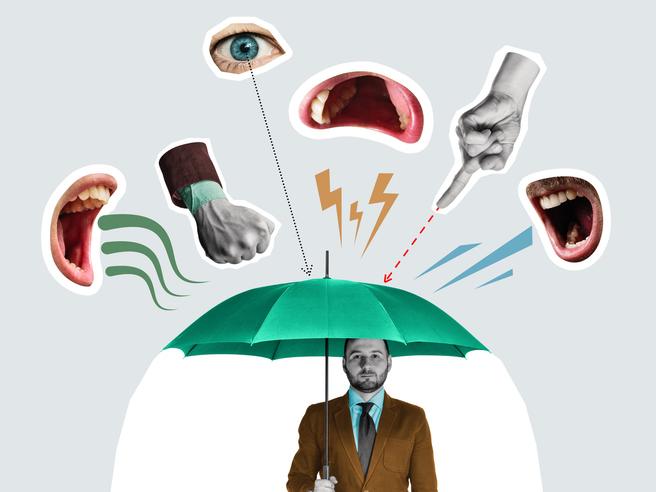
What鈥檚 more, the creative process involves risk-taking and embracing failure. Students can feel exposed and judged when sharing their ideas, provoking experiences of uncertainty and anxiety. Students can withdraw and engage in , ie, behaviours that focus on saving face rather than engaging with learning, and bad experiences can be catastrophic for learners鈥� self-confidence and their willingness to engage in future creative processes.
The challenges of generating ideas can be amplified by modern technologies such as virtual learning environments. Students can feel surprisingly vulnerable when engaging with creative projects in online settings, according to recent carried out at RCSI University of Medicine and Health Sciences. This study of medical students in a game-based learning context highlighted that the barriers introduced by online teamwork, such as reduced opportunities for informal and 1-2-1 conversations, can impact on the collaboration vital for creative work.
Creating a safe space
The study did, however, highlight a valuable tool at the disposal of educators: psychological safety. is the shared belief within a team that it is possible to ask questions, express ideas and admit to mistakes without fear of retribution. When psychological safety is established, team members feel empowered to speak up, even when faced with implicit power dynamics or hierarchies. This groupwork construct first emerged in but has been popularised in recent years by authors such as Harvard Business School鈥檚 . Over recent decades, psychological safety has been extensively studied in, and widely embraced by, teams who engage in high-stakes work such as those in the healthcare and aviation industries.
Psychological safety can also have positive powerful influences on learning environments. highlights that psychological safety can lead to improved learning behaviours. Students that experience this are more likely to spend time seeking information and engaging in problem solving. In the field of medical education, note that students, once freed from a feeling of being judged, can 鈥渁uthentically and wholeheartedly concentrate on engaging with a learning task without a perceived need to self-monitor their projected image鈥�. Overall, it seems that psychological safety can empower students to surpass feelings of self-doubt in order to develop and share ideas, as well as to gain feedback on their work.
What, then, can educators do to establish psychological safety in their teaching contexts? This might seem simple at surface level, but it does take intention and effort to nurture an enabling team climate. Here are some tips to get started:
1. When designing your programme or module, incorporate authentically collaborative exercises. Give your students opportunities to engage in real-world group tasks that lack clear black-or-white solutions.
2. When introducing students to such exercises, invest time in team formation. Use introductions and ice-breakers to set the right tone. Consider adding brief, low-stakes fun activities throughout the length of longer, longitudinal projects.
3. Engage with your students to co-construct guiding principles for the work. Ask the question: 鈥淗ow do we want to work together?鈥� and harness the group鈥檚 thoughts to boost a sense of autonomy.
4. Reflect on your leadership style. Creative work requires that an educator takes a more facilitative rather than authoritarian role. The aim is to nudge and support, not to direct or control.
5. Flatten the invisible hierarchy. In classrooms, the default position is that students will view you as a powerful, and potentially threatening, presence. Techniques to overcome this include sharing vulnerability, like saying, 鈥淭his is not a topic where I have all the answers鈥�, or highlighting learner strengths, such as, 鈥淵ou have much more knowledge than me on how your peers apply this in real life.鈥�
6. Encourage interaction with and between the students by using direct questions, and names: 鈥淎mir, what are your thoughts on this so far?鈥� Many will be reluctant to speak unless explicitly invited.
7. Ask open-ended questions and engage in attentive listening. To facilitate creative thinking, it鈥檚 important not to muddy the waters and lead the students. By speaking less and listening more, this indicates to the students that their ideas are valuable and wanted.
8. Monitor and validate emotions. Creative work can be confusing and frustrating; it helps to acknowledge this as you go. Use supportive statements like, 鈥淭his one is tricky, I鈥檓 not surprised you鈥檙e struggling here.鈥�
All of these steps can bring us closer to establishing psychological safety when working with our students. It鈥檚 important to recognise that psychological safety is like a fine sculpture 鈥� beautiful to behold and likely the result of weeks or even years of sustained effort. This concept is also delicate, however; it can be easily broken and, once shattered, difficult to repair.
Nevertheless, the effort is worth the sacrifice, as it enables us, somewhat fittingly, to harness the power of effective human interaction to tackle the complex and rapidly evolving global challenges that impact humanity.
Jenny Moffett is an educationalist at RCSI University of Medicine and Health Sciences. She was the winner of Most Innovative Teacher of the Year category in the 2024 色盒直播 Awards. A full list of nominees can be found .
If you would like advice and insight from academics and university staff delivered direct to your inbox each week, .
