
The scroll, the soundbite and the seminar: where media habits meet teaching


Created in partnership with
Created in partnership with
You may also like
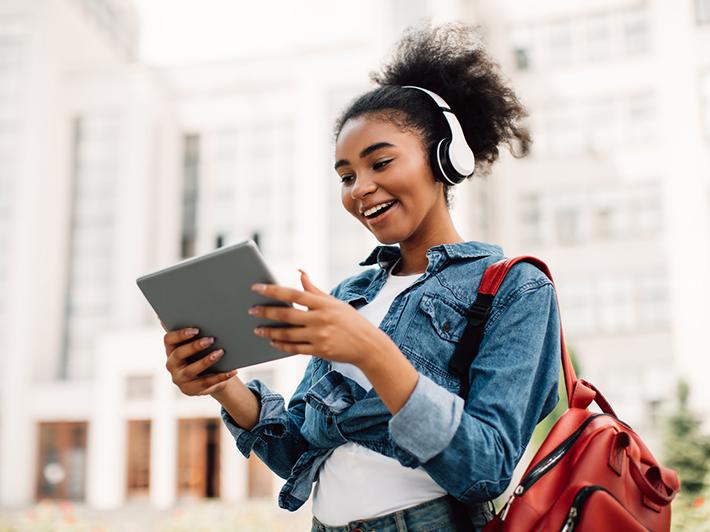
Meeting students 鈥渨here they are鈥� is a well-worn refrain in higher education. But there鈥檚 no mystery where that is: they are on their phones. They鈥檙e on Instagram, X and YouTube. They鈥檙e listening to long-form podcasts while walking to class or cooking dinner. They鈥檙e consuming short videos with the flick of a thumb. And they do all this at a pace and frequency that can make a 90-minute lecture feel like a relic.
As someone who studies and teaches media, I鈥檝e learned that the ways students consume information are not just trends, they鈥檙e signals. They tell us how we must change 鈥� not just what we teach but how we teach it.
Today鈥檚 students have been raised in a world of algorithms, scrolls and screens. They are conditioned to demand relevance, clarity and authenticity 鈥� instantly. Watching a student spend five minutes on Instagram can offer more insight into how students engage with content than an hour in a pedagogical workshop. This doesn鈥檛 mean students lack attention span; it means they have a finer filter. They engage with content that earns their attention, not assumes it.
- Spotlight guide: How to make social media an academic friend not foe
- Transform digital pedagogy with social media
- How I use social media as a research tool
This presents both a challenge and an opportunity. Here, we can take a cue also from public relations, which is built on knowing an audience, adapting the message and delivering it in the right format. Those principles should guide the modern classroom. If we want to engage students, we have to meet them on their terms: visually, aurally and interactively.
How to use media consumption habits to inform your teaching
When it comes to social media, students tend to consume media on two extremes of content length 鈥� super-short and compelling social media clips and reels, and oft-hours-long audio podcasts.
In my own courses, this has meant making important changes. Students often tell me they鈥檙e listening to my recorded lectures as if they were podcasts, while exercising or commuting. So I鈥檝e adapted. For asynchronous lectures and seminars, I design them with audio in mind, using verbal signposts to highlight key points and eliminating visual dependencies that won鈥檛 translate. I鈥檝e invested in a good microphone and started editing my audio for clarity.
In a world of passive consumption, voice matters. Delivery matters. Sound matters.
But it鈥檚 not just about shifting format. It鈥檚 about creating content that respects their media habits. Social media teaches us that visuals matter. So does storytelling. Humour, vulnerability and personality matter, too. Professors who incorporate these elements 鈥� through explainer videos, dynamic slides, real-time polls or media-rich projects 鈥� are tapping into the communication strategies that students respond to daily. When I assign students to build a brand on Instagram or analyse influencer crises through a PR lens, engagement skyrockets. Theory comes to life.
Prepare students for misinformation
And while we鈥檙e working to engage students, we can also look to social media for warnings. Chiefly, we need to prepare them to resist misinformation. That same algorithmic environment that keeps them engaged is also optimised to mislead. Scroll culture 鈥� passive, rapid, emotionally driven 鈥� is fertile ground for disinformation. As educators, we are no longer just conveyors of knowledge. We鈥檙e front-line defenders of truth.
In my classes, we study how misinformation spreads 鈥� not just politically but commercially and emotionally. We explore how fake donation links go viral after disasters. We dissect the tactics behind manipulative headlines and AI-generated content. And we talk about platform-specific vulnerabilities: TikTok鈥檚 speed, Instagram鈥檚 aesthetics, X鈥檚 brevity. Students learn to ask: who created this content? Why am I seeing it? How does it make me feel 鈥� and is that emotion being exploited?
This is digital literacy at its most urgent: not just how to use tools but how to question them. Not just how to consume media, but how to critique and verify it. These skills should be as foundational as writing or research.
Leverage technology
Technology can be part of the solution. AI tools such as text-to-speech and auto-captioning make education more accessible and customisable. Students are already using these tools to create their own study aids. We should be guiding that process, helping them leverage technology for clarity and comprehension, not just convenience.
The takeaway is this: we need to think a bit more like media producers, crafting educational content with the same intentionality and adaptability that the best communicators use.
This is a call to action. If we want to be heard, we have to tune into the techniques used in the channels our students already trust. If we want to teach them to think critically, we need to understand the platforms that shape their worldview. And if we want to make a difference, we need to stop resisting the media ecosystem and start learning from it.
Let鈥檚 meet students where they are. Not just on their screens, but in their habits, their scrolls and their soundscapes. And from there, let鈥檚 teach them to question, to verify and to create.
Cayce Myers is a professor of public relations and director of graduate studies at the School of Communication at Virginia Tech.
If you would like advice and insight from academics and university staff delivered direct to your inbox each week, .
