
Squaring the circle: managing the challenges and opportunities of AI in higher education




Studiosity
Studiosity is a world leader in formative feedback and purposeful peer connection
Higher education has an AI conundrum. On the one hand, new technologies such as AI are reshaping our world, urging universities to develop AI skills in students. On the other, the threat that generative AI tools such as large language models (LLMs) pose to academic integrity has created a culture of caution that is stifling innovation in teaching and student support.
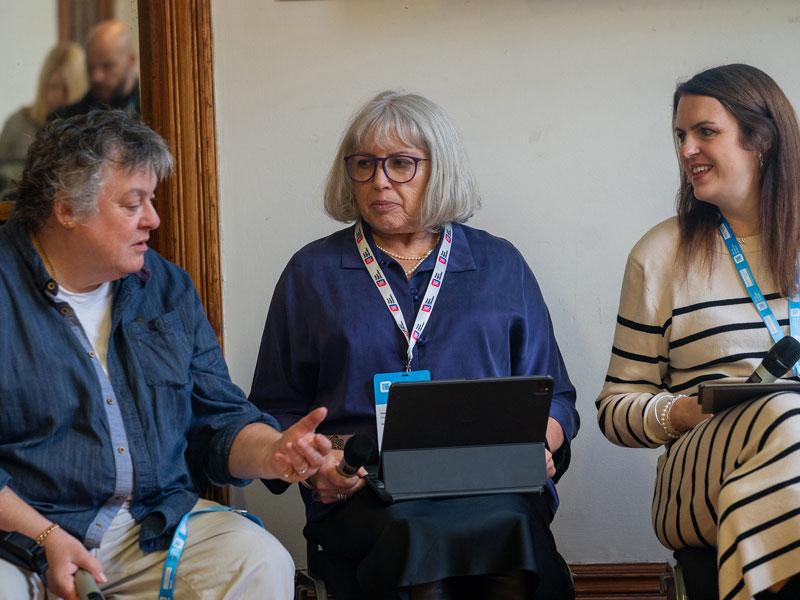
Speaking at a panel discussion held during the 2024 色盒直播 World Academic Summit, Rebecca Bunting, vice-chancellor and chief executive of the University of Bedfordshire and member of Studiosity鈥檚 Academic Advisory Board, said that university leaders must support staff and students in navigating the ongoing changes driven by technology. Jean-No毛l Ezingeard, vice-chancellor and president of the University of Roehampton in London, said that universities need the courage and vision to embed AI into their existing policies: 鈥淚t鈥檚 about shaping the future of education. It鈥檚 about innovating.鈥�
Ezingeard argued that transparency, trust and agility are key to getting AI policies right. 鈥淓veryone has to place trust in the academic integrity of the institution and employers need to be able to trust that universities have assessed their students properly,鈥� he said.
Trust is a vital component for establishing AI in academia and robust data protection policies are essential. Faculty need to be supported when AI is introduced to teaching and assessment, especially when LLMs raise issues surrounding intellectual property. 鈥淲e partner with universities around the world to offer round-the-clock online study support,鈥� said Isabelle Bristow, managing director for the UK and Europe at Studiosity.
The panel highlighted Studiosity as an example of a student support service that uses AI ethically and is built with a focus on user needs and quality assurance. Studiosity鈥檚 AI for learning technology offers real-time, formative feedback to students on the quality of academic writing. Its writing feedback and study support model is trained using human reinforcement learning by Studiosity鈥檚 trusted specialists, which guarantees a degree of security. 鈥淎I that we have was built only using the feedback our specialists have given to students for 20 years,鈥� Bristow said.
Sally Wheeler, vice-chancellor of Birkbeck, University of London, believes faculty need to be encouraged to adopt AI. Allowing students to use the same tools that they will ultimately use in the workplace can only enhance graduate employability. 鈥淎I and embryonic forms have been used in professions such as law for document retrieval. We need students to be able to embrace that information sorting ability when doing assessments and research,鈥� Wheeler said. 鈥淚t鈥檚 about overcoming our staff reluctance. It鈥檚 about building trust in our community, with employers, students and our staff.鈥�
Noreen Golfman, also a member of Studiosity鈥檚 Academic Advisory Board and former provost and vice-president of academic at Memorial University of Newfoundland in Canada, said that many students believe their university expends more effort in preventing the use of generative AI as a tool for academic misconduct than they do in teaching it or supporting students with AI tools. 鈥淭here is a gap between what faculty are offering at the moment and what student expectations are,鈥� she said.
Universities might be rightly concerned about AI and how best to use it, but they cannot ignore it. If the 21st-century curriculum must feature AI, the tools and the policies that govern it need to be human-centric. Bristow said that AI models should have a human hand in their design: 鈥淭he tools and applications that contain a human element are the ones that are the most reliable and trustworthy.鈥�
The panel:
- Isabelle Bristow, managing director for the UK and Europe, Studiosity
- Rebecca Bunting, vice-chancellor and chief executive, University of Bedfordshire (chair)
- Jean-No毛l Ezingeard, vice-chancellor and president, University of Roehampton, London
- Noreen Golfman, member of the Academic Advisory Board, Studiosity and former provost and vice-president of academic, Memorial University of Newfoundland
- Sally Wheeler, vice-chancellor, Birkbeck, University of London
about Studiosity.
