
Traditional ecological knowledge can inspire students to take climate action


Created in partnership with

Created in partnership with
You may also like
Popular resources
China鈥檚 climate education leans heavily on Western science, often neglecting . This centuries-old Indigenous wisdom, honed through communities鈥� deep interdependence with their environments, offers insights into sustainable practices and location-specific cultural values. These are aspects that modern science alone cannot fully replace. The omission of this knowledge in the classroom risks leaving students disengaged and ill-equipped to tackle the climate crisis holistically.
To bridge this gap, we designed a traditional ecological knowledge climate change education workshop for first-year undergraduates. Students came from diverse regions across China, where our institution is located.
There were two stages to the workshop: first, to ground participants in climate science fundamentals; second, to task them with collaborative problem-solving (eg, water scarcity and agricultural sustainability) through both traditional ecological knowledge and Western scientific lenses. The result? A surge in students鈥� perceived ability to address climate change. This enthusiasm is evidence that blending ancient wisdom with modern knowledge does not just broaden perspectives, it can also prompt climate action.
Empower and foster optimism
Our workshop demonstrated that integrating traditional ecological knowledge into a range of curricula, including environmental science, sustainability studies, geography, anthropology, education and business studies, significantly empowers students and boosts optimism.
In our case, our Chinese setting lends itself to an exploration of the historical development of terracing, a technique used for millennia in China鈥檚 mountainous regions. The rice terraces of Yunnan, Guangxi and Fujian, some more than 1,300 years old, showcase traditional ecological knowledge鈥檚 longevity and effectiveness in maximising arable land, preventing soil erosion and enhancing water retention.
Educators can highlight traditional ecological knowledge approaches to water conservation by teaching students about the intricate canal systems created for specific regional topographies. We used the documentary to showcase the 1,300-year-old rice cultivation methods of the Hani community in southwest China to visually demonstrate the power of traditional ecological knowledge. Images of small dams and ponds reinforce how traditional ecological knowledge users regulate and store water alongside principles of contour farming and terracing. These features are crucial components of Chinese traditional ecological knowledge that minimise erosion and runoff, demonstrating practical solutions for modern climate challenges.
Our students reported that learning about these historical, sustainable practices instilled a sense of hope. One participant expressed 鈥淐hinese traditional ecological knowledge has made me feel more optimistic because it offers insights into balancing natural ecosystems.鈥� Another stated, 鈥淭raditional ecological knowledge gives me hope that we can use ancient wisdom to solve modern climate challenges.鈥� This sentiment underscores traditional ecological knowledge鈥檚 potential to bridge the gap between abstract environmental theories and tangible, actionable solutions.
- Resources on how higher education can contribute to achieving the Sustainable Development Goals
- Moving beyond climate change to teach the climate crisis
- Start your university on a path to resilient net zero
How to incorporate traditional ecological knowledge into teaching
Our students felt their prior education heavily favoured scientific and technological climate solutions, neglecting cultural and historical perspectives. They argued including traditional ecological knowledge in curricula would broaden understanding and foster innovative solutions.
Educators can bridge this gap by drawing from research by , which explores how traditional Chinese architectural features can be adapted for modern buildings to enhance thermal performance. Their study of six historical timber-frame halls revealed key climate-responsive strategies. In summer, high heat capacity provides shelter from hot air, while natural ventilation serves as an auxiliary comfort measure. In winter, south-facing orientations, maximum window-to-wall ratios and thermal insulation optimise solar gains and protect against the cold. By demonstrating how these kinds of traditional designs address climate challenges, educators can connect historical wisdom with modern applications.
Cultivate motivation for climate action
Our workshop significantly shifted students鈥� sense of personal responsibility towards climate action. Many reconsidered their daily behaviours, realising their potential to contribute to climate solutions. Participants also highlighted the communal nature of traditional ecological knowledge, which inspired collective action. One commented, 鈥淪ince the workshop, I鈥檝e started paying more attention to my carbon footprint and have made small changes in my lifestyle.鈥� Traditional ecological knowledge prompted these shifts by demonstrating the tangible, community-driven practices that have mitigated environmental degradation for generations. This growing awareness of personal responsibility signals the potential for stronger, more engaged climate activism from students.
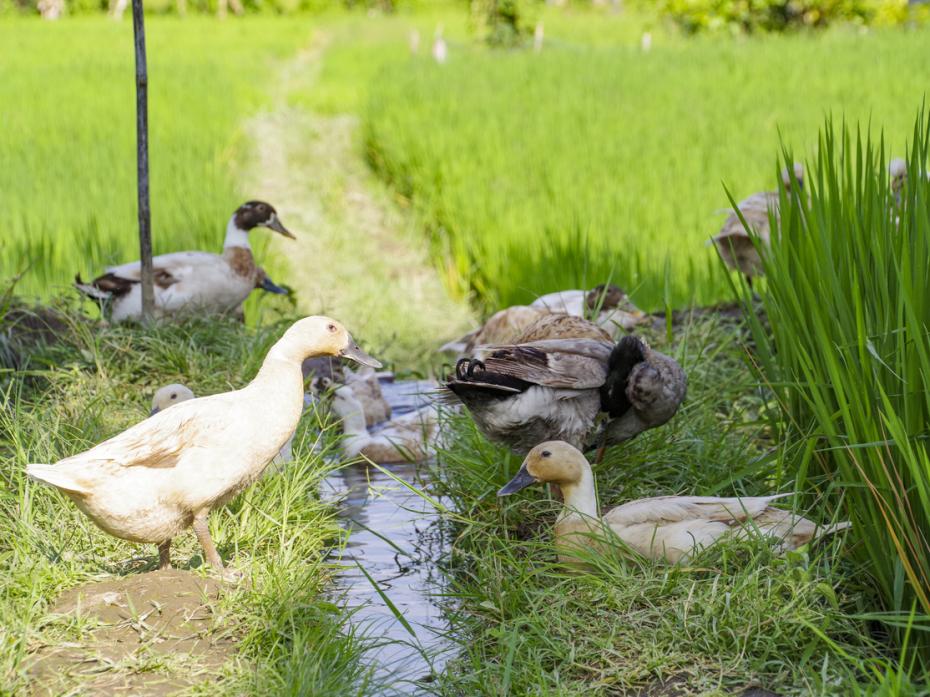
Educators can encourage students鈥� sense of personal responsibility to take climate action by using location-relevant case studies. For instance, we illustrate how Indigenous communities鈥� controlled prevent wildfires and support biodiversity. We also teach students about rice-duck co-culture, which involves the use of ducks in rice paddies to naturally control pests, reducing the need for pesticides and boosting production. These two examples are supported by modern science and scientific data.
Using examples that are supported by science allows us to practise 鈥�鈥�, encouraging students to see traditional ecological knowledge and Western knowledge as complementary, rather than opposing, forces. We encourage you to discuss how each offers unique insights into climate issues to foster mutual respect for both. Shift the focus from 鈥渢ruth鈥� to 鈥渦sefulness鈥�, highlighting how each system solves specific problems. Traditional ecological knowledge excels in local environmental management, while Western science provides broader . Challenge students to assess their usefulness for local climate adaptation.
Integrating traditional ecological knowledge into climate education instils hope, connecting students to their heritage and empowering them to make positive changes. Students also said that integrating traditional ecological knowledge helped foster cultural sensitivity and respect for the contributions of a diverse range of knowledge systems to global climate discourse. This blend of traditional and modern learning offers a richer, more nuanced understanding of climate change.
Bin Feng is the associate language lecturer at Xi鈥檃n Jiaotong-Liverpool University鈥檚 English Language Centre. Daniel Yonto is an assistant professor in the department of urban planning and design at Xi鈥檃n Jiaotong-Liverpool University.
If you would like advice and insight from academics and university staff delivered direct to your inbox each week, .
