
The trouble with Bloom鈥檚 taxonomy in an age of AI



Created in partnership with

Created in partnership with
You may also like
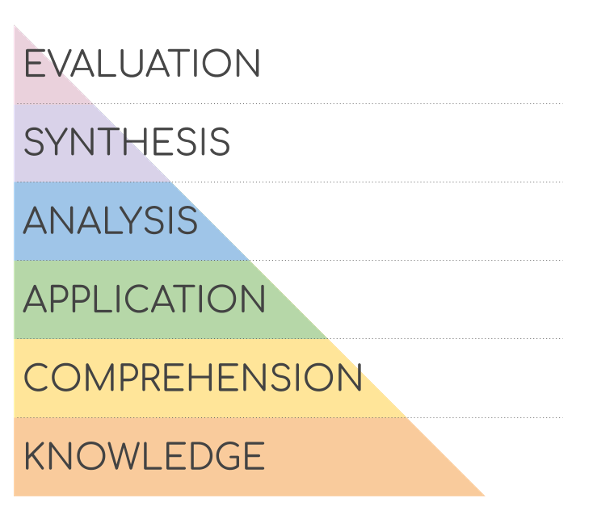
Educators have always faced the challenge of how to determine if their students are thinking. Since the 1950s, Benjamin Bloom鈥檚 taxonomy of educational objectives has been one of the most influential pieces of educational psychology (see Figure 1). However, in an age where teachers may be using AI as tools to assist them in task creation, we need to reconsider how we design teaching for thinking.
Large language models (LLMs) and AI tools such as ChatGPT and Gemini use Bloom鈥檚 taxonomy as one of the most significant influences on how critical thinking is defined. In this article, we explore the challenge of integrating AI into teaching, learning and assessment while Bloom鈥檚 taxonomy is a significant part of its training model.
What is Bloom鈥檚 taxonomy?
Bloom鈥檚 taxonomy, a six-category framework of educational goals, has been highly influential for educators for nearly 70 years because it creates a clear structure for learning, is highly versatile across contexts, and facilitates the creation of critical-thinking activities.
It鈥檚 versatile but is Bloom鈥檚 accurate?
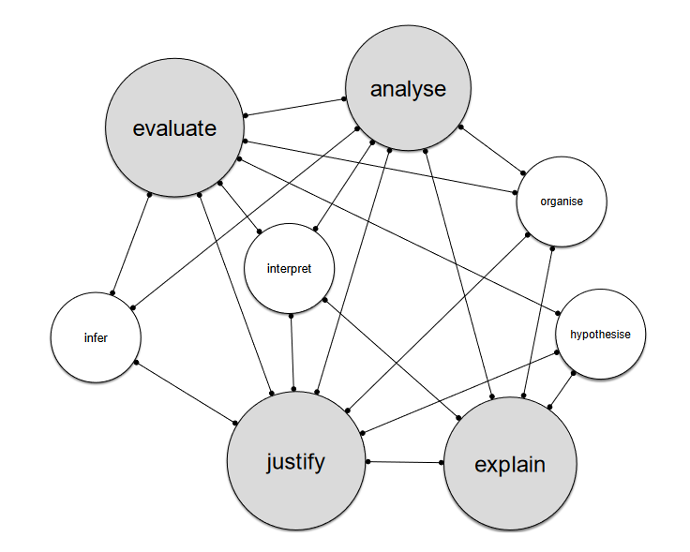
Criticisms of Bloom鈥檚 taxonomy have also been around for more than half a century, and many are well known. One of the major issues is that the taxonomy does not capture the complexity of cognitive skills. It can be seen as inaccurate as cognitive processes interrelate with each other rather than building on each other.
To illustrate, let鈥檚 look at an 鈥渦nderstanding鈥� task (see Figure 2): 鈥淒efine life.鈥�
This is a deceptively complex task. Not only would it require a standard understanding of respiration, response to stimuli and reproduction, but it also merits discussion of more spiritual or existential issues. Ecosystems and stars may fit a definition of life. Any definition will be incomplete and debatable. A student would demonstrate high levels of critical thinking and insight if discussing the foundations of our understanding rather than merely explaining our definitions.
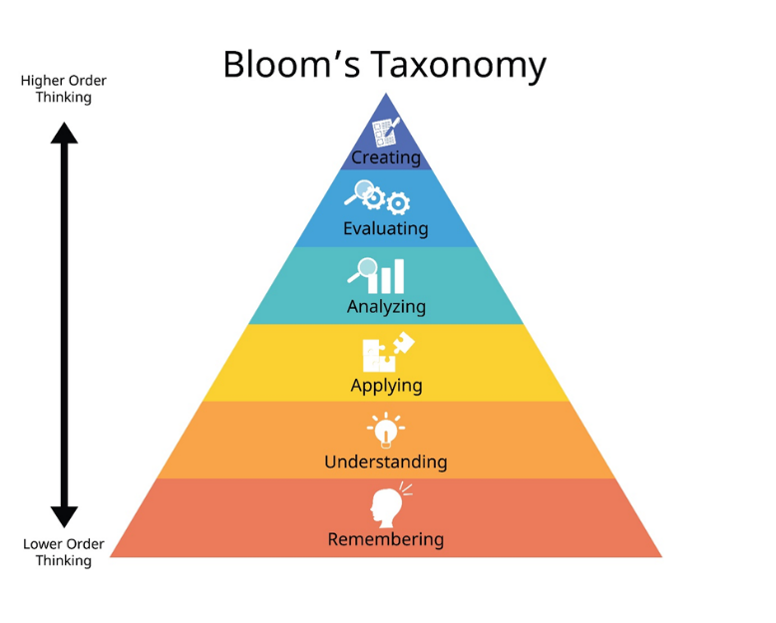
The taxonomy has seen revisions over time (), but these still don鈥檛 fully capture the interrelated and interdependent nature of thinking processes. Alternatives such as (as proposed by Peter Ellerton and co-authors from the University of Queensland Critical Thinking Project in 2022) argue that cognitive skills often require a host of related skills and tasks (see Figure 3), and this may be more useful in designing for learning objectives.
Prompting AI for assistance with teaching thinking
To illustrate, we prompted ChatGPT to create questions that demand increasing amounts of critical thinking on the following task: 鈥淒escribe the structure of a cell.鈥� It responded with:
- Basic understanding: Describe the basic structure of a cell, including its main components.
- Comparing cell types: Compare and contrast the structures of prokaryotic and eukaryotic cells, highlighting their key differences and similarities.
- Specialised cell structures: Explain how the structure of a plant cell differs from that of an animal cell, emphasising the unique organelles found in each type.
- Cellular functions: How do the various organelles within a eukaryotic cell contribute to its overall function and survival?
- Cellular adaptations: Analyse how the structure of cells in different organisms reflects their specialised functions and adaptations to their environments. Provide examples.
- Theoretical cell modifications: If you were to design a hypothetical cell with a specific function, how would you modify its structure to optimise its performance? Explain your reasoning.
When asked how it increased the critical thinking, ChatGPT responded that it incorporated elements of Bloom鈥檚 taxonomy in designing to promote higher-order thinking, then demonstrated how each question aligned to the taxonomy. Generative AI still 鈥渂elieves鈥� that cognitive skills are hierarchical.
This is a problem for educators in two significant ways.
First, the questions are wildly inconsistent in their level of difficulty. The sixth question (creating) is so challenging that it鈥檚 likely only a biology expert would be able to answer it. This might be addressed through using better prompting practices, but this leads to the second problem.
When asking AI for greater levels of critical thinking, it struggles to discern among levels. 鈥淐omparing and contrasting鈥� is an 鈥渁nalysis鈥� skill, yet ChatGPT has treated this as an 鈥渦nderstanding鈥� skill. We鈥檇 likely use both, too, further demonstrating that these skills are interrelated rather than hierarchical.
- Spotlight guide: Bringing GenAI into the university classroom
- Three ways to promote critical engagement with GenAI
- Apply the principles of critical pedagogy to GenAI
Create AI prompts that widen perspective or engage with ambiguity
The obvious conclusion is that educators need to be careful with their prompting when it comes to using AI as a design tool. More than that, we need to recognise that the AI may create hierarchies (which are potentially inaccurate to boot) whenever prompted for suggestions or during brainstorming.
Educators will need to consider the specific cognitive skill they want to teach or assess (when analysing, do they really mean classifying?), along with the qualities of that thinking (do they care about having coherent classifications or broad classifications, for example).
Consider prompting AI for activities that require broader perspectives or engage with the ambiguities of the issue. 鈥淐reate an activity that explores the many ways life can be defined鈥� is going to produce greater variety and complexity than asking it to 鈥渁dd critical thinking or difficulty to this question鈥�. Given that contemporary critical-thinking pedagogy recognises the interrelatedness of thinking skills as well as the different qualities of thinking, it鈥檚 essential that we exercise care when designing critical-thinking tasks.
Luke Zaphir and Dale Hansen are learning designers in the Institute of Teaching and Learning Innovation at the University of Queensland.
If you would like advice and insight from academics and university staff delivered direct to your inbox each week, .
Additional Links
For more on qualities of thinking, see 鈥�鈥� by Peter Ellerton of the UQ Critical Thinking Project.
