
A guide to arts-based methods in medical research


Created in partnership with
Created in partnership with
You may also like
Popular resources
Medical research is usually seen as an exact science, built on controlled variables, measurable outcomes and repeatable results. Yet, all research is a creative and curious process at its core.鈥赌�
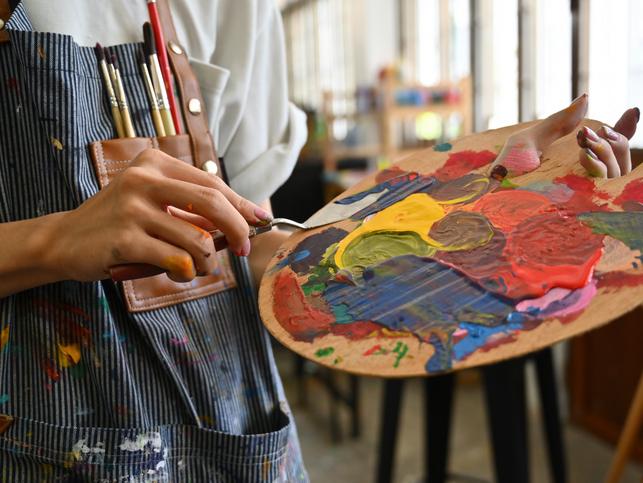
Arts-based research methods can generate and translate data on their own, or lend themselves to a mixed methods approach. Creative practices like sculpting and drawing can reveal nuanced dimensions of human experience and emotion that words alone cannot convey.鈥赌�
When creativity joins the methodology, it opens new ways to explore complex human experiences such as pain, trauma and healing.鈥赌�
What is arts-based research?鈥��
Arts-based research uses creative processes like visual art, music and movement as forms of expression. These media can generate, analyse, represent or translate data, offering a deeper understanding of experiences that are hard to capture with words.鈥赌�
- How to demonstrate the worth of arts-and-humanities-based research
- Arts and humanities scholars can engage with policy, too
- Putting arts and humanities at the heart of research
In medical contexts, this approach can illuminate hidden aspects of a patient鈥檚 lived experience. Pain drawings, for instance, allow patients to visualise sensations that are difficult to describe verbally. Physicians report that these drawings have helped them better understand and even diagnose the cause of their patients鈥� pain.鈥赌�
In arts-based research, art often becomes the data itself. For example, one of my past projects involved working with a war veteran who created small figures to translate her experiences. This showed how creative processes can help uncover personal insights. The time it took to make the figures gave the veteran space to reflect and discover how her self-sacrifice impacted both herself and her personal relationships.鈥赌��
Bridge artistic expression with evidence鈥��
For medical researchers interested in integrating arts-based methods into their work, the challenge often lies in allowing creative exploration while upholding traditional research expectations. But this doesn鈥檛 have to be an either-or decision. In some settings, artistic enquiry stands alone. In others, there鈥檚 overlap as it complements conventional medical methods.鈥赌�
The key is experimentation. Start small by asking study participants to draw an image, write a story or take a picture of their experience. This gives participants ownership of how they tell their story, and their artwork can create an incredibly rich source of data that enriches and deepens other findings.鈥赌�
Another practical approach is to conduct a more familiar qualitative or quantitative study and explore how arts-based methods can be integrated into the study鈥檚 format. When someone experiences their own 鈥渁ha鈥� moment, understanding something new, it becomes easier to recognise the value behind arts-based research.鈥赌�
Cross-disciplinary collaboration鈥��
Effective arts-based medical research often relies on strong interdisciplinary partnerships. For instance, teams can consist of artists, art therapists, neuropsychologists, physicians and students. Differing perspectives work to bring innovative contributions to projects.鈥赌�
Maintaining mutual respect and curiosity is essential. In interdisciplinary teams, there鈥檚 a risk that a hierarchy may develop, where those with the highest education level or from the sciences make most of the decisions. Instead of assuming one person holds the correct answer because of their education level or title, researchers should actively question differences in observations.鈥赌�
Researchers can work to model this approach by bringing curiosity to group discussions. Ask questions, take note of when something doesn鈥檛 seem to align with observations and be receptive to differing perspectives. These moments of curiosity often spark the most engaging conversations and help research teams refine assumptions or uncover gaps in initial hypotheses.鈥赌�
Where to start with arts-based methods鈥��
For those looking to adopt arts-based methods in their own medical research, adjusting the mindset is often the starting point. Unlike hypothesis-driven scientific studies that test predefined variables, arts-based approaches in medicine are often emergent and more open-ended. They may require patience, flexibility and a willingness to explore without a clear expectation of what you may find.鈥赌�
Medical students and early-career researchers should work to enhance their observational skills, becoming attuned to nonverbal experiences. Try to develop multiple vocabularies: visual, musical, narrative and movement-based.鈥赌�
One helpful resource for developing a visual vocabulary is the book Visual Intelligence by Amy Herman, which helps people better explain what they see in the world around them.鈥赌��
Arts-based research doesn鈥檛 replace traditional methods. Instead, it expands the methods available to scientists and clinicians. There鈥檚 significant overlap with qualitative research, and qualitative coding methods are often applied in arts-based research. The more researchers learn about the value of different methods, the better they鈥檒l be at selecting the combination that best aligns with what they鈥檙e trying to learn, and is most respectful to the needs and experiences of the people with whom they work.
Heather Spooner is associate scholar with the Center for Arts in Medicine at the University of Florida.
If you would like advice and insight from academics and university staff delivered direct to your inbox each week, .
