
Simple ways to bring climate education into every classroom


Created in partnership with

Created in partnership with
You may also like
Climate change disproportionately impacts young people, yet young people are systematically excluded from decision-making about the climate. Research has revealed that young people around the world, and in Australia, are experiencing about the climate crisis and are feeling a to solve a problem they did not create.
While young people are experiencing high levels of climate anxiety, they remain proactive and optimistic about the future. They believe action is still possible and are calling for stronger leadership, greater transparency, and meaningful opportunities to shape climate-related decisions.
As a university, we have made a clear global commitment to climate action. Our signing of the in 2025 reaffirms our responsibility to address climate issues through our educational offerings.
Climate action is consistently our students鈥� top sustainability priority. As Western Sydney continues to become more climate-exposed, our students are acutely aware of the . Climate education equips learners with the knowledge, skills and values they need to understand and respond to climate change, helping them move from anxiety to action and preparing them for the future.
Embedding climate education
(EfS) offers us a powerful pedagogical approach for preparing students to address complex global challenges such as climate change. It aims to foster critical, reflective, creative and future-focused thinking; it supports understanding of systems and complexity; and it strengthens students鈥� values, worldviews and capacities for participation and partnership.
- Spotlight guide: Higher education鈥檚 bumpy road to net zero
- Use art to cultivate business students鈥� understanding of climate change
- Traditional ecological knowledge can inspire students to take climate action
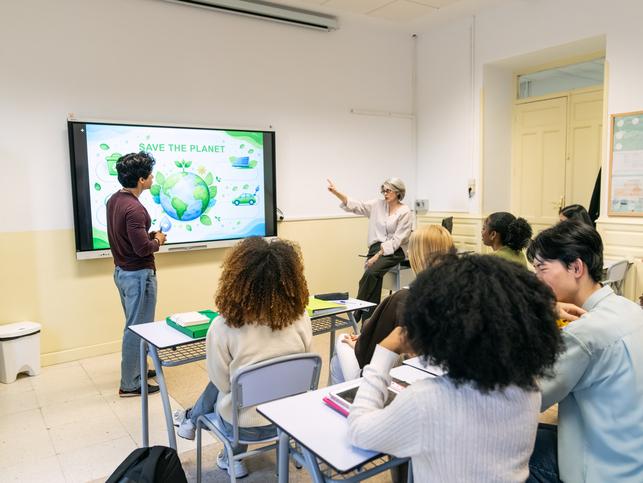
Effective climate education should engage cognitive, social and emotional learning, while also encouraging students to take informed action, regardless of whether you teach in the health, social sciences, design, business, engineering, or education disciplines. Learning experiences should be learner鈥慶entred, place鈥慴ased, experiential and reflective, and, where appropriate, draw on Indigenous knowledge and perspectives.
Here are six practical ways to integrate climate education into your classroom:
- Use climate story mapping: have students map a local place (for example, a river corridor, heat hotspot or transport hub) and reflect through a group discussion board or a reflective assessment task on the question, 鈥淲hat does climate change look and feel like here?鈥� Visual methods, such as photovoice, which involves sharing insights and views through photographs, young people鈥檚 sense of agency and optimism about climate change.
- Use scenario鈥慴ased tasks and real climate data: draw on existing climate projections, datasets or local case studies to explore how your local area might respond to heatwaves, flooding, supply鈥慶hain disruptions or biodiversity decline. Students can apply discipline鈥憇pecific analysis and problem鈥憇olving to real鈥憌orld challenges.
- Run a activity: bring the interactive card鈥慴ased game into your tutorial with support from a trained facilitator (or become one yourself). It helps students unpack climate drivers, impacts and leverage points for action while strengthening foundational systems thinking.
- Integrate : incorporate short writing tasks, like writing a letter to a politician, that connect climate issues with civic participation, advocacy and democratic processes, helping students articulate informed climate perspectives (or send students along to their workshops).
- Run a political placard activity: turn climate-related emotions into powerful visual communication by encouraging students to create placards capturing the mental and emotional impacts of climate change. Young people鈥檚 climate placards are a of visual communication, political agency and evidence. These visuals can be shared on campus, on social media or at political events and protests.
- Incorporate field鈥慴ased learning: use campus or local community sites for hands鈥憃n climate activities 鈥� from urban heat monitoring to waterway health assessments 鈥� to build real鈥憌orld awareness and experiential learning.
Next steps for your teaching
- Start small by integrating one climate鈥慺ocused learning activity this semester. Keep it positive by focusing on activities that foster agency and encourage localised climate-action. If you鈥檙e feeling more confident, identify a week, topic or assessment where climate provides a meaningful context or focus.
- Identify where climate-related issues already intersect with your field and choose an approach that fits naturally within your existing teaching.
- Partner with an expert. Reach out to colleagues at your institution researching climate or invite industry or community partners into your classroom to enrich learning.
- Model openness by sharing your own climate concerns or reflections to create a sense of safety and authenticity around the topic.
- Talk with your students. Ask what climate topics feel relevant to their discipline or future careers. Their insights often reveal simple, meaningful points for integration.
Embedding climate education in your teaching is ultimately about empowering students to make sense of the world they are entering and to feel capable of facing their future. By integrating even small moments of climate-focused learning, we strengthen our students鈥� resilience, their sense of agency and their confidence and capacity to contribute to a more sustainable society.
Brittany Vermeulen is a sustainability programme manager and 脺mit Kennedy is the learning communications specialist in the office of the pro vice-chancellor (learning and teaching), both at Western Sydney University.
Additional Links
Western Sydney University鈥檚 learning and teaching guide:
Research report:
Research report:
Podcast: 鈥�&苍产蝉辫;
Curriculum guide:
Reading:
